
Published 18 Nov 2026 · Solanki Defence Academy · Facts from the official notifications
The Bihar Police high jump needs a smooth run‑up, a powerful take‑off, and a safe landing. Aim for a 4 ft clearance as the minimum. Keep strides short, swing arms upward at take‑off, and land with both feet together to avoid injury and earn full marks.
Direct Technique Overview
A high jump consists of three linked phases: the run‑up, the take‑off and the landing. In the run‑up the athlete builds speed and aligns the body toward the bar. The take‑off is the moment the foot pushes off the ground, converting horizontal speed into vertical lift. The landing follows the bar clearance, where the athlete lands safely on the mat or sand pit while keeping balance.
Each phase requires a distinct body position. During the run‑up the shoulders stay relaxed, arms swing in rhythm, and eyes focus on the bar. At take‑off the knee of the take‑off leg bends deeply, the opposite arm drives upward, and the torso leans forward briefly before rotating. In the landing phase the athlete lands on both feet, knees slightly bent, and rolls forward to absorb impact.
The transition between phases must be smooth. Any hesitation in the run‑up reduces momentum, a weak push at take‑off limits height, and a poor landing can cause injury. Practising the sequence repeatedly builds muscle memory, allowing the body to execute each step automatically during the actual PET of Bihar Police.
- Run‑up builds speed and sets direction.
- Take‑off converts speed to vertical lift.
- Landing absorbs impact and maintains balance.
Physical Requirement
Bihar Police PET sets a minimum high‑jump mark of 4 ft for general, BC and EBC candidates. Scoring starts from this height and rises up to 5 ft for additional marks. Candidates belonging to SC, ST or other reserved categories must clear at least 3 ft, with marks available up to 4 ft. These standards are part of the 100‑mark physical efficiency test that determines the final merit list.
The height requirement for the overall physical standard (PST) is 165 cm for general and BC candidates, 160 cm for EBC, and 155 cm for all categories. While the height of the jump is measured in feet, the applicant’s standing height must meet the PST limits before attempting the jump. Failure to meet the PST height disqualifies the candidate regardless of jump performance.
Weight is also checked during PST. The minimum weight is 48 kg for all candidates. Maintaining this weight helps generate the power needed for a 4‑ft jump. Candidates should balance strength training with proper nutrition to stay within the weight range while improving jump height.
- Minimum jump: 4 ft (general/BC/EBC), 3 ft (SC/ST).
- Maximum scoring height: 5 ft (general), 4 ft (SC/ST).
- Standing height requirement: 165 cm (general), 160 cm (EBC), 155 cm (all).
- Minimum body weight: 48 kg.
| Category | Minimum Height (ft) | Marks Height (ft) |
|---|---|---|
| General / BC / EBC | 4 | 5 |
| SC / ST / EBC (women) | 3 | 4 |
Bihar Police High Jump Minimum Heights and Marks
Warm‑up and Flexibility
A proper warm‑up raises body temperature and prepares muscles for explosive effort. Start with 5‑minute light jog or jump‑rope to increase heart rate. Follow with dynamic movements such as high‑knee runs, butt‑kicks and side‑shuffles. These actions activate the leg muscles used in the run‑up and take‑off without causing fatigue.
Flexibility of the hamstrings, calves, hip flexors and lower back is crucial for a good take‑off angle. Perform standing toe‑touches, seated forward bends and lunges, holding each stretch for 15‑20 seconds. Add arm circles and shoulder rolls to keep the upper body fluid, as arm swing contributes to momentum during the run‑up.
Finish the warm‑up with a few practice jumps at low height. This drills the movement pattern and checks that the joints feel loose. Keep the session under 20 minutes total to avoid draining energy needed for the actual PET. Consistent warm‑up before every training day reduces the risk of muscle strain.
- 5‑minute light jog or rope skipping.
- Dynamic leg drills: high‑knees, butt‑kicks, side‑shuffles.
- Static stretches: hamstring, calf, hip flexor, lower back (15‑20 sec each).
- Arm circles and shoulder rolls.
- Low‑height practice jumps to reinforce technique.
Run‑up Details
The run‑up for high jump is usually 6‑8 strides, but the exact number depends on the athlete’s leg length and speed. Begin with a comfortable stride length, then gradually increase each step until the penultimate stride, called the “approach stride,” which is slightly longer to build momentum. The final stride before the take‑off is short and firm, positioning the foot just behind the bar line.
Speed must be controlled, not maximal sprint. Aim for a brisk but steady pace that allows you to maintain balance. Too fast a run‑up can cause over‑reaching and loss of coordination at take‑off. Practice with a marked runway, counting each stride to develop a repeatable pattern. Use a metronome or a partner’s clap to keep rhythm consistent.
Arm swing adds forward thrust and helps lift the body upward. Keep the elbows close to the torso during the early strides, then swing the arms upward as you approach the take‑off stride. The swing should be synchronized with the opposite leg’s movement - the right arm swings forward when the left leg is the take‑off leg, and vice‑versa.
- Total strides: 6‑8, ending with a short final stride.
- Maintain brisk, controlled speed; avoid full sprint.
- Synchronize arm swing with opposite leg.
- Mark runway to count strides and keep rhythm.
Take‑off Mechanics
At the moment the take‑off foot contacts the ground, the knee should be bent about 90 degrees. This deep bend stores elastic energy in the quadriceps and calf muscles. The opposite arm drives upward aggressively, helping to lift the torso. Keep the head looking straight ahead or slightly upward; looking down can drop the center of gravity.
Push off with the ball of the foot, not the heel. The force should travel through the ankle into the calf, then the thigh, creating a vertical thrust. As the foot leaves the ground, the hip rotates toward the bar, and the free leg swings forward and upward, forming a “scissor” motion that clears the bar.
After the bar is cleared, the body should be in a slightly arching position, with the shoulders over the hips and the legs extended. This position reduces the chance of knocking the bar on the way down. Immediately prepare to land on both feet, keeping the knees soft to absorb impact.
- Knee bend ~90° at foot contact.
- Push off from ball of foot; generate vertical thrust.
- Opposite arm drives upward; head looks forward/upward.
- Hip rotates toward bar; free leg swings in scissor motion.
- Land on both feet with soft knees.
Landing Safely
When you reach the take‑off point, aim to place the take‑off foot about 20 cm behind the bar. The foot should land flat, heel slightly raised, and the toes pointing forward. Keep your eyes on the bar until the foot contacts the ground, because a premature glance can cause loss of balance. The arm opposite the take‑off leg should swing upward, helping the body to rise straight over the bar. This foot‑placement rhythm creates a stable base for the jump.
As you clear the bar, pull the lead leg up and over first, keeping the knee high and the shin close to the bar. Simultaneously, swing the trailing leg in a circular motion, allowing the hips to rotate naturally. The upper body should arch slightly, creating a ‘U’ shape that lets the torso pass without touching the bar. Keep the shoulders relaxed and the head looking forward, not down at the mat, to maintain balance. This coordinated motion maximizes clearance while using minimal effort.
After the bar, land on the cushioned mat with both feet together, knees slightly bent. Absorb the impact by allowing the hips and knees to give way, rather than locking the joints. Keep the arms close to the body to avoid hitting the bar on the way down. Stand up slowly, checking for any pain in the ankles or knees before moving to the next jump. Practising a controlled landing reduces the risk of sprains and helps you maintain stamina throughout the PET.
- Place take‑off foot about 20 cm behind the bar
- Keep the opposite arm high until the foot leaves the ground
- Land with both feet together, knees soft
- Absorb impact by bending hips and knees
Common Mistakes & Safety
One frequent error is taking the take‑off foot too far from the bar, which forces the body to lean forward and knocks the bar down. Another mistake is a shallow knee bend; without enough flexion the jumper cannot generate vertical lift. Many candidates also swing the arms too low, losing the upward thrust needed for clearance. Correct these by measuring the take‑off point, practicing a deep knee bend of about 90 degrees, and keeping the arms high until the foot leaves the ground.
Landing too stiffly is another common problem. When the knees are locked, the impact travels up the spine and can cause lower‑back strain. Some jumpers land on one foot, putting uneven load on the ankle and increasing sprain risk. To stay safe, always land with both feet together, knees soft, and let the hips drop slightly. Use the mat’s cushioning; if the mat feels hard, inform the supervisor to replace it.
Training without proper rest can lead to fatigue, which reduces jump height and raises injury chances. Dehydration makes muscles less elastic, causing cramps during the take‑off. Always drink water before and after each session, and include at least one rest day after three consecutive training days. If you feel sharp pain in the knee, ankle or lower back, stop immediately and seek medical advice. Following these safety habits keeps your body ready for the physical efficiency test.
- Take‑off foot too far from the bar
- Insufficient knee bend before take‑off
- Landing with locked knees or on one foot
- Skipping rest days leads to fatigue and injury
Next Steps
Begin with a simple schedule: three sessions per week, each lasting 45 minutes. Keep a notebook to record the number of attempts, the height cleared and any discomfort felt. This systematic record helps you see progress and adjust the training load.
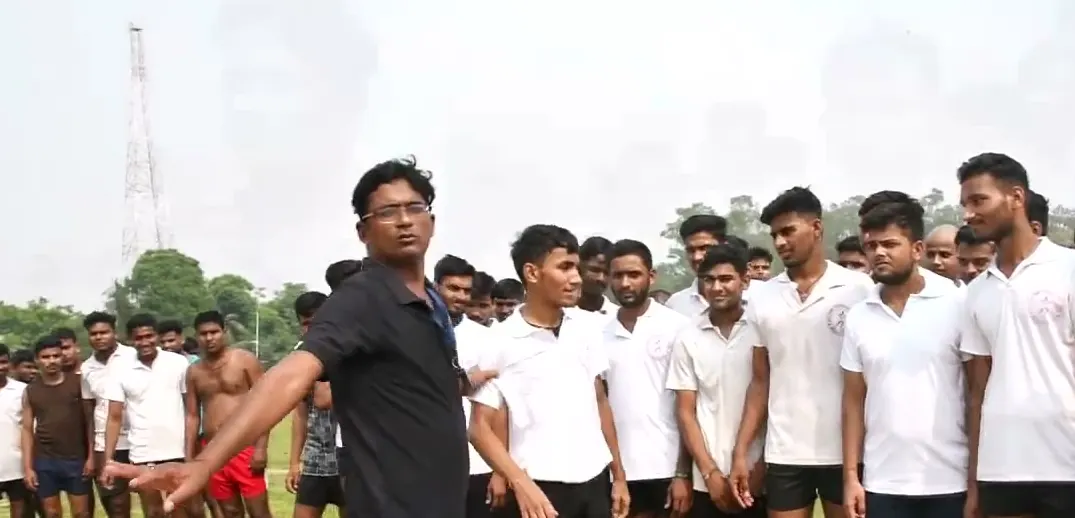
Join a coaching group where an experienced trainer watches your technique and gives instant feedback. At Solanki Defence Academy, students practice on the same ground used for PET, and teachers correct foot placement and arm swing in real time. Ask the trainer to film one jump per session; reviewing the video slows down the movement and reveals hidden errors. Regular expert guidance shortens the learning curve and builds confidence for the exam day.
After four weeks, add a mock PET once a week to simulate the real environment. Include the required 4 ft minimum high jump and try to exceed it by 6‑8 inches as you improve. Combine the jump with the other PET events - running and gola - to manage overall fatigue. Ensure you wear proper footwear with good grip and use the campus mat that meets safety standards. Consistent mock tests prepare you mentally and physically for the final selection.
- Train 3 times a week, 45 min each session
- Record height cleared and any discomfort after each jump
- Get video feedback from a trainer each session
- Do a weekly mock PET after four weeks of practice
Conclusion
Mastering the high jump is a blend of correct technique, regular practice and injury‑free training. Each phase - run‑up, take‑off and landing - must be rehearsed until it becomes a natural movement. When the body follows the right pattern, the height cleared rises without extra strength. This steady improvement reflects directly in the marks awarded in the physical efficiency test for Bihar Police.
Students who follow a disciplined schedule and seek feedback at Solanki Defence Academy find their jumps becoming smoother week after week. The campus provides a safe mat, experienced trainers and a supportive peer group, all of which reduce anxiety before the PET. By staying focused and practising the steps described, you increase the chance of scoring the full marks needed for a good overall rank.
Remember to check the latest Bihar Police notification for any change in the minimum height or scoring system before each test. Keep your body hydrated, get enough sleep and listen to any pain signals; pushing through injury only harms future performance. With patience, correct technique and the right guidance, the high jump will become a reliable source of marks in your physical efficiency test.
- Follow the correct technique consistently
- Use the academy’s safe mat and expert trainers
- Stay hydrated, rest well and listen to pain signals
- Check official notifications for any updates
Physical standards from the previous notification
| Measurement | Male | Female |
|---|---|---|
| Height | 165 cm (Gen/BC) · 160 cm (EBC/SC/ST) | 155 cm (all categories) |
| Chest | 81 cm, 86 cm expanded (Gen/BC/EBC) · 79/84 cm (SC/ST) | Not measured · minimum weight 48 kg |
| Event | Male | Female |
|---|---|---|
| Running | 1.6 km in 6 minutes (50 marks) | 1 km in 5 minutes (50 marks) |
| High jump | minimum 4 ft (25 marks up to 5 ft) | minimum 3 ft (25 marks up to 4 ft) |
| Gola (shot put) | 16 lb, minimum 16 ft (25 marks up to 20 ft) | 12 lb, minimum 12 ft (25 marks up to 16 ft) |
Rules can change in a new notification – check the current official PDF.
- Run‑up should be short, controlled and end with a strong arm swing.
- Take‑off requires a deep knee bend and upward thrust of the arms.
- Land with both feet together, keeping the body upright to clear the bar.
- Practice the three phases separately before combining them in full jumps.
Frequently asked questions
What is the minimum height to clear in Bihar Police high jump?
The minimum height is 4 ft for General, BC and EBC candidates and 3 ft for SC, ST and women candidates.
How many marks are awarded for a 5 ft jump?
A jump of 5 ft earns the full 25 marks allotted for the high jump section.
How many strides should the run‑up have?
Use 4 to 6 short strides, ending with the last stride slightly longer to generate power.
What warm‑up exercises help improve jump performance?
Light jogging, dynamic leg swings, ankle circles and calf raises prepare the muscles.
Where can I get professional coaching for Bihar Police high jump?
Solanki Defence Academy in Adampur, Bhagalpur offers daily ground training, including high jump, with experienced coaches.
Physical and written preparation on one campus in Adampur, Bhagalpur, with hostel and mess, run by Ranjit Singh Solanki, Ex-Para Commando. +91 97982 20164